REMARKS:
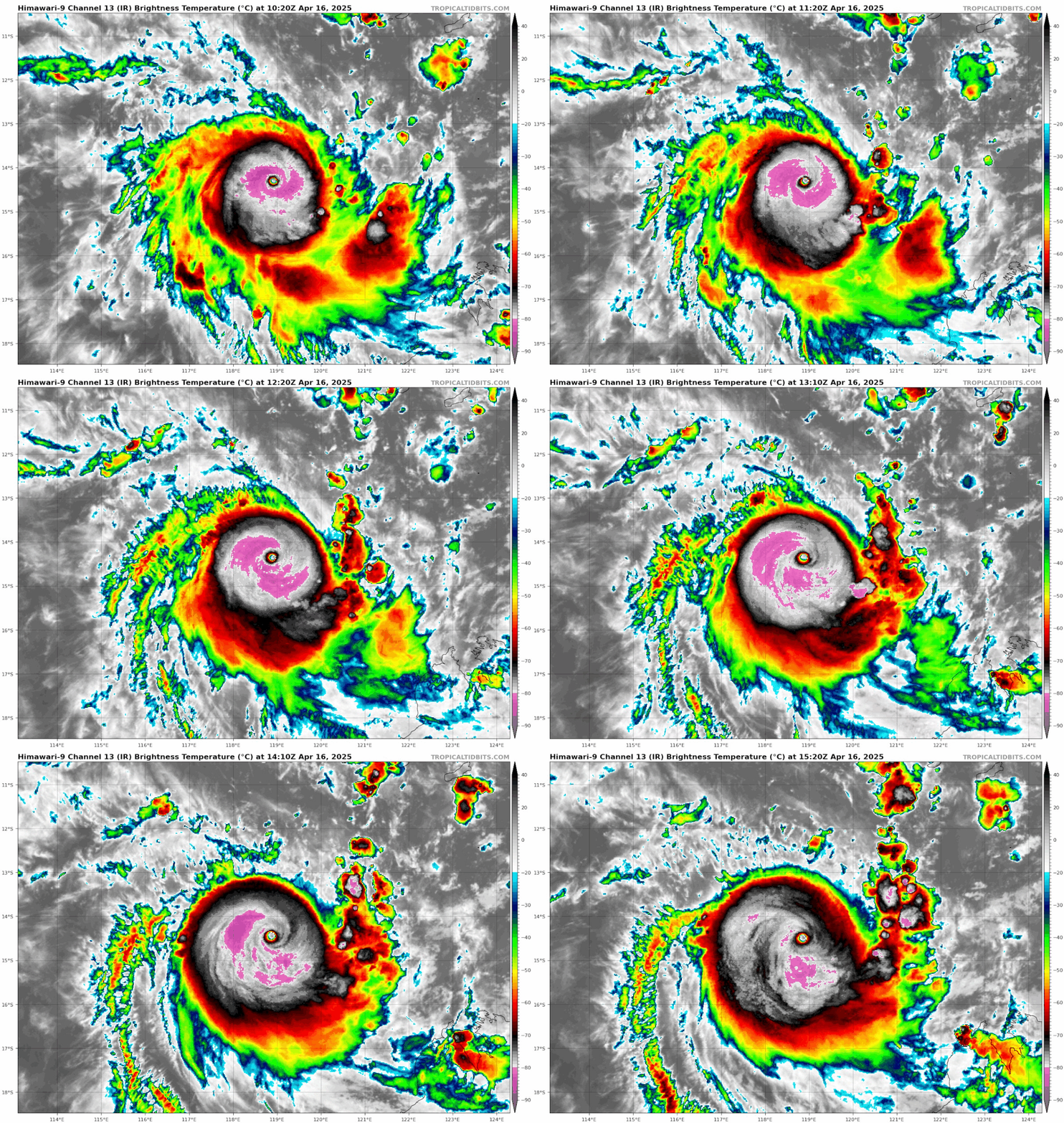
Severe Tropical Cyclone Errol has developed into a category 4 cyclone
displaying an eye. Position is based on animated EIR satellite imagery with
good confidence.
Intensity 95 kn based on a combination of intensity estimates.
Dvorak analysis. Dvorak analysis: DT is 6.5 based on eye pattern, W surrounding
and OW/WMG eye temp. Trend is D+ giving a MET of 4.5 and PT 5.0. FT and CI=5.5
are constrained. Objective estimates (1-minute average) at 1200UTC: ADT 117 kn,
AiDT 116 kn, DPRINT 112 kn, DMINT 108 kn and SATCON 117 kn.
Environmental conditions are favourable for further development over the next 6
to 12 hours. Sea surface temperatures are near 30C along the forecast track,
and deep layer moisture is in place around the system. Errol lies along the
axis of an upper-level anticyclone and CIMSS analysed deep layer wind shear is
about 10 kn from the northeast.
A shortwave upper trough over Western Australia is enhancing poleward outflow
and there is reasonable upper divergence analysed to the south of the
circulation. As a result further development is possible in the next 6 to12
hours. The upper trough is likely to increase vertical wind shear, thiswill
also be accompanied by dry air intrusion into the core and as a result Errol is
expected to weaken quickly during Thursday. Continued weakening is likely as
Errol approaches the west Kimberley coast on Saturday and it is possible the
system may have weakened below tropical cyclone intensity before crossing the
coast.
The system has become slow moving over the last 6 hours as the influence of a
mid-level ridge to the south weakens. An amplifying upper trough over southwest
WA is expected to steer the system southeast from Thursday, towards the west
Kimberley coast. The depth and intensity of Errol hasn't been captured fully by
the deterministic model runs. As a result, there is large uncertainty in its
movement along its track. On its current forecast, Errol is expected to make
landfall as a tropical low near Cape Leveque on Saturday afternoon. If Errol
weakens quickly then the low-level centre may be steered back to the west,
consequently there is still a large spread in location of the ensemble members
in the longer term.
Visit the Caribbean-Central America Weather Thread where you can find at first post web cams,radars
and observations from Caribbean basin members
Click Here